You have probably sat through a pipeline review where every deal looks healthy on the surface, and then the quarter closes short. It is not a mystery if you know where to look. The B2B sales process is where the gap between what teams think is happening and what is actually happening becomes painfully visible.
The challenge is not that your team does not know how to sell. Most of them do. The challenge is that without a structured B2B sales process, execution varies wildly from rep to rep, deal to deal, quarter to quarter. What works for your top performer rarely transfers. What closes one enterprise deal gets improvised in the next.
This article walks through the core stages of a high-performing B2B sales process, the practices that separate consistent teams from reactive ones, and the structural shifts that make the difference between a pipeline that looks good and one that actually closes.
Why the B2B Sales Process Breaks Down Before It Begins
Most B2B sales process failures are not execution failures. They are structural ones.
The sales cycle length in enterprise tech deals has grown. Buying committees have expanded. Multi-stakeholder decision making means your rep is no longer selling to one champion but to a group of people who rarely agree, rarely meet together, and all carry different objections. The enterprise sales cycle today involves, on average, six to ten decision makers. Each has a different definition of value. Each carries a different concern.
A team that runs on instinct and individual judgment cannot sustain that complexity. The reps who close in this environment are not necessarily more charismatic. They are more structured. They know which stage they are in, what the buyer needs to believe before moving forward, and what signals tell them the deal is real.
The difference between a 90-day sales cycle and a 180-day one is rarely the product. It is usually the absence of a defined process for reading buyer intent signals and moving decisions forward deliberately.
The Core B2B Sales Process Steps
A structured B2B sales process is not a checklist that reps resent. It is a shared language for where every deal stands, what needs to happen next, and why. When everyone on the team runs the same framework, you gain coaching leverage, forecasting accuracy, and a foundation for scale.
These are the five stages that high-performing B2B tech sales teams work from.
Stage 1: Sales Prospecting
Sales prospecting in B2B tech is not about volume. It is about fit and timing. The highest-performing teams invest in understanding buyer intent signals before they ever reach out, mapping which accounts show genuine buying triggers versus those who match an ICP profile on paper but are not in-market.
The B2B lead qualification process begins here, not at the first call. Teams that qualify late burn time on deals that will never close. Teams that qualify early build a pipeline they can actually work.
Stage 2: Discovery and Qualification
This is the stage most teams rush. It feels slow. It feels like it delays the demo. It does not. It determines whether you ever get a second conversation worth having.
Consultative selling at its core is about making the buyer feel genuinely understood before you try to solve anything. That requires asking questions that surface business impact, decision timelines, budget realities, and internal political dynamics. It requires sitting with ambiguity rather than pitching into it.
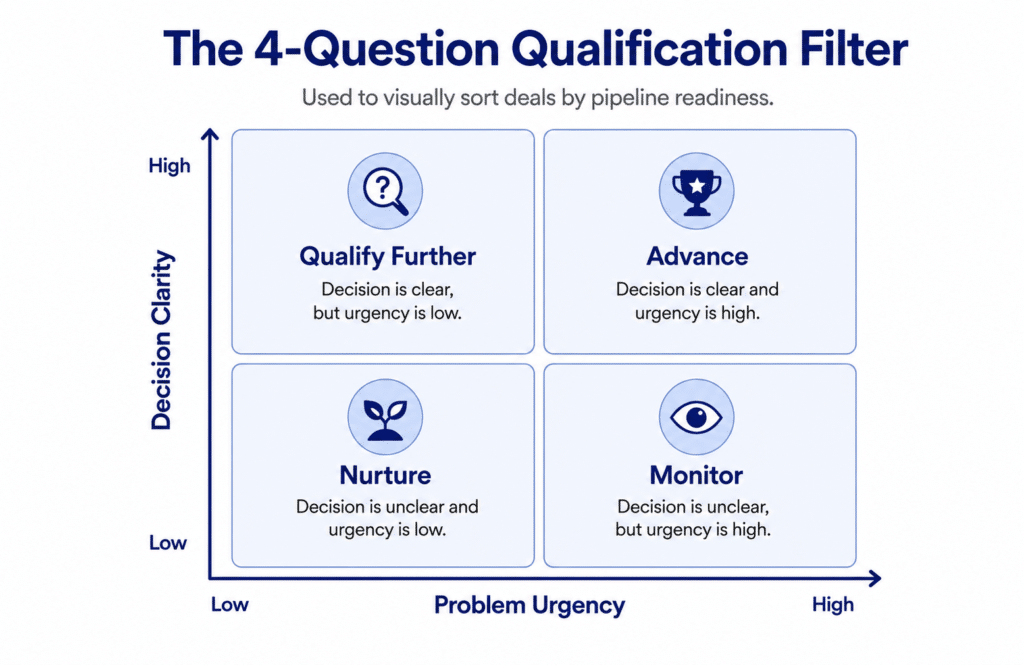
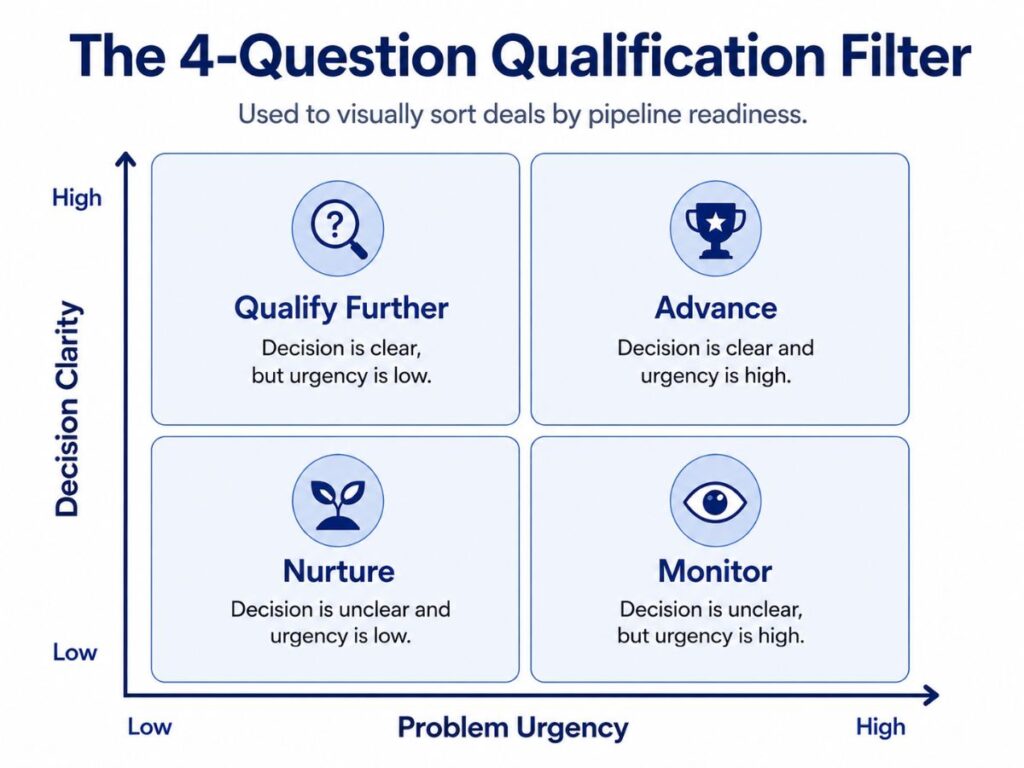
The B2B lead qualification process should give you clear answers to four things: Does this problem cost them enough to justify a solution? Is there budget or a pathway to it? Who makes the final decision and who influences it? What happens if they do nothing?
Reps who skip rigorous discovery do not shorten the sales cycle. They create deals that stall at procurement, die at legal, or evaporate when the internal champion leaves the room.
Stage 3: Solution Framing and Stakeholder Alignment
In enterprise sales, multi-stakeholder decision making means your pitch to the technical evaluator is a different conversation than your pitch to the CFO. High-performing teams do not send the same deck to everyone. They map the buying committee, understand each stakeholder’s definition of risk, and build a case that holds up across all of them.
This is also where objection handling either wins or loses deals quietly. The objections that sink enterprise deals are rarely the ones reps expect. They are the ones that surface in rooms where your rep is not present, from stakeholders who were never mapped, around concerns that were never asked about.
A structured approach to objection handling is not a script. It is a methodology for surfacing concerns proactively, addressing them with evidence rather than reassurance, and keeping momentum moving forward across a buying group that rarely moves at the same pace.
Not sure where your team’s deals are actually breaking down? The Revenue-Gap Assessment benchmarks your team across all five stages of the B2B sales process. It takes 20 minutes and gives you a clear picture of where performance gaps are costing you pipeline. Start Free Assessment →
Stage 4: B2B Sales Pipeline Management
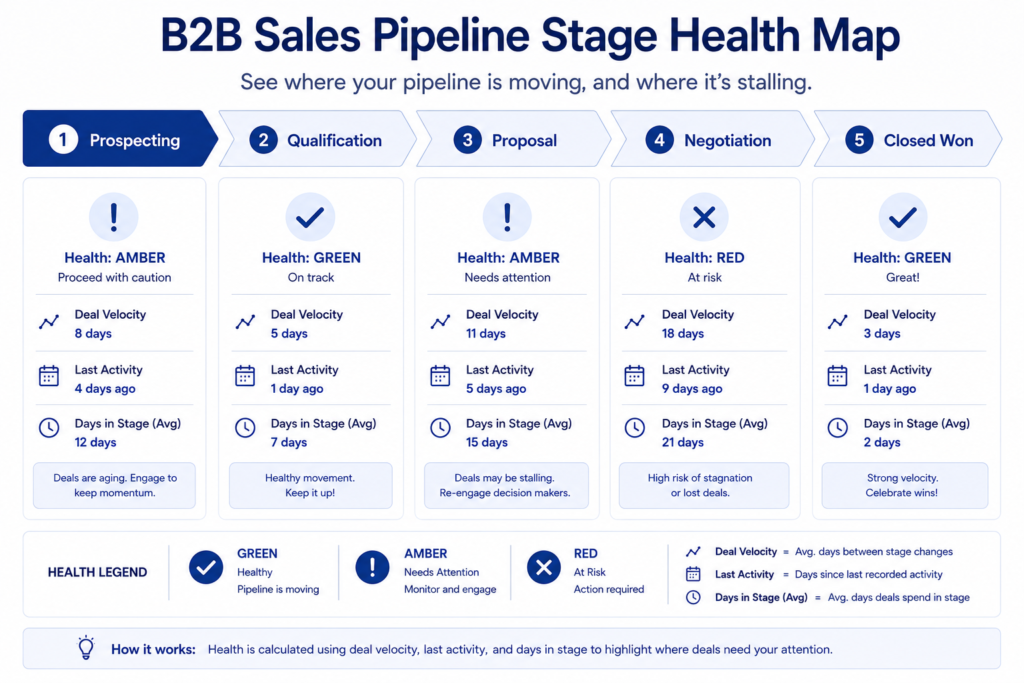
B2B sales pipeline management is where strategy and execution either connect or disconnect. A healthy pipeline is not a large one. It is an accurate one. High-performing teams use CRM software not as an admin obligation but as a coaching and forecasting tool, and they review it differently.
They are asking: What is the next committed action in this deal? What evidence do we have that the buyer is advancing internally? Which deals have gone quiet, and what is the plan?
The sales enablement infrastructure behind this matters more than most teams realise. When reps have the right content, coaching, and context at each stage, the sales pipeline moves more predictably. When they are improvising at every stage, pipeline reviews become guesswork dressed up as forecasting.
Stage 5: Closing and Post-Sale Expansion
Knowing how to close B2B deals faster is not about pressure tactics. It is about removing the friction that accumulates when the buyer is not fully aligned internally, the business case is not crisp, or the next step has been left vague.
High-performing teams close faster because they have done the work in stages two through four. The buyer journey has been managed, not just witnessed. Decision makers have been heard. Objections have been addressed before they became blockers.
Closing is also not the end of the B2B sales process. The best teams treat the close as a transition into account expansion, using the same consultative selling methodology to grow what they have already won.
What High-Performing Teams Do Differently
The gap between average B2B sales teams and exceptional ones is rarely about talent. It is about structure, and what sits underneath it.
- They define what good looks like at every stage, so coaching is specific and consistent rather than based on gut feel.
- They run structured deal reviews using CRM software as a source of truth, not a data entry system.
- They invest in reading buyer intent signals early in the process, so they are not chasing deals that were never real.
- They train for multi-stakeholder decision making specifically, understanding that enterprise deals involve political dynamics that a product pitch cannot resolve.
- They reinforce objection handling in the field through embedded coaching, because 87 percent of training is forgotten within 30 days without reinforcement.
- They treat the buyer journey as something to be shaped, not just tracked.
Avalara ran this kind of structured system and saw deal cycles shrink by 34 percent with quota attainment doubling in six months. Globant reduced pipeline stagnation by 28 percent in 90 days through the same approach. The numbers are not magic. They are the outcome of process becoming behaviour.
The Structural Question Most Teams Avoid
There is a question underneath all of this that most sales leaders sense but rarely address directly: is the problem a training problem, a process problem, or a leadership problem?
The honest answer is usually all three, operating simultaneously, reinforcing each other. A new CRM implementation does not fix skill gaps. A sales training programme does not fix a broken pipeline management culture. And neither fixes the absence of a leader who can institutionalise what good execution looks like across every rep, every quarter.
High-performing revenue organisations do not leave that diagnosis to chance. They run it systematically before they spend another quarter treating symptoms.
The teams that close consistently are not the ones with the best reps. They are the ones with the clearest process, the most structured coaching, and the leadership to make both stick.
Start With Assessment, Not a Guess
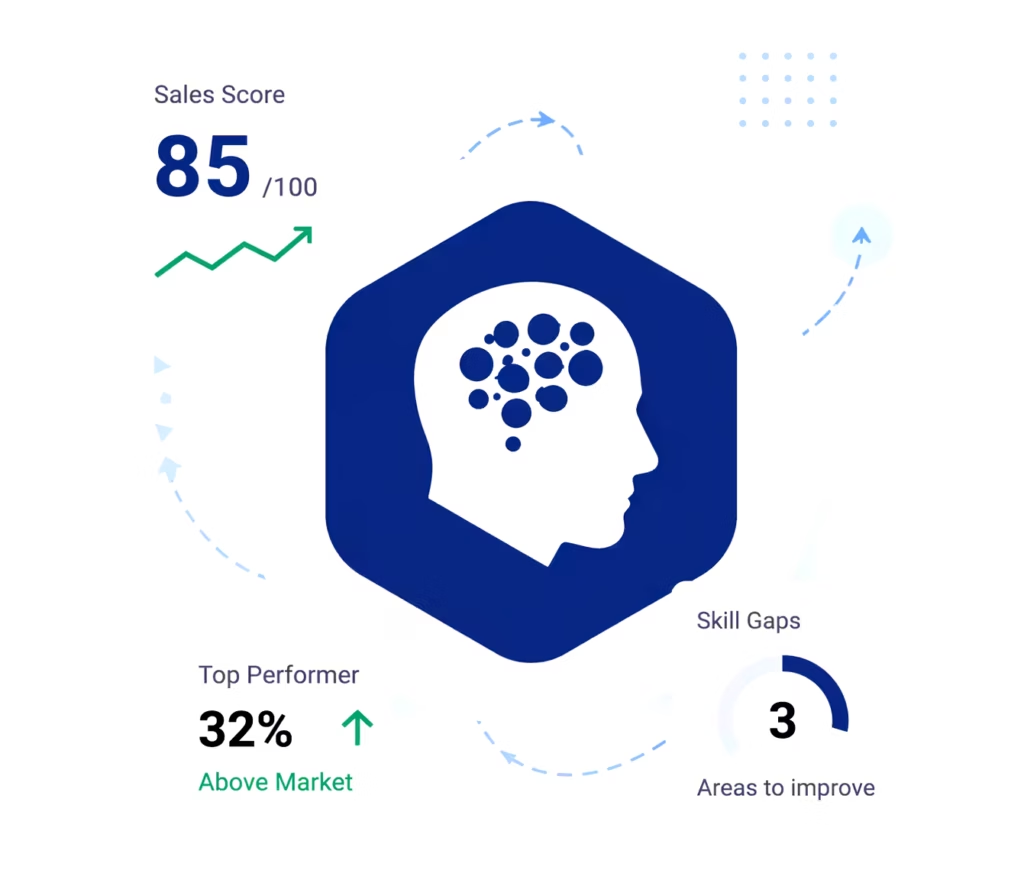
Before investing in training or restructuring your sales pipeline, know exactly where the gaps are. The Revenue-Gap Assessment benchmarks your team against the top 4 percent of B2B tech sales professionals across all five stages of the sales process. Free. 20 minutes. Get Instant Report.
TALSMART is a global revenue execution partner for B2B tech companies, operating across 100 + countries and 23 languages. The Revenue Execution System is built exclusively for the complexity of enterprise technology sales.